



Vibratory Feeders
⚙️ Understanding Vibratory Feeders
A vibratory feeder is an apparatus. It uses a drive mechanism to create rapid, directional vibrations. Specifically, this mechanism is either electromagnetic or electromechanical. The device generates motion in a pan or trough. This repetitive motion combines a subtle upward and forward thrust. Consequently, the material is propelled forward in a continuous series of slides or micro-hops. This unique transport method offers key advantages. It often surpasses traditional belt conveyors in specific applications.
CHECK OUT THIS VIDEO: DYNA-SLIDE Vibratory Parts Feeders
Benefits of Vibratory Feeding
This unique method of transport offers significant advantages over traditional belt conveyors in specific applications:
- Continuous Flow: They ensure a steady, measurable flow rate of material. Therefore, they are crucial for consistency in batching, mixing, and processing.
- Gentle Handling: The controlled tossing action minimizes product breakage and degradation. As a result, they are ideal for delicate products. This includes cereals, food items, or fragile components.
- Harsh Environment Capability: They feature minimal moving parts. There are no return mechanisms, belts, or rollers. Thus, they are inherently durable. They can easily withstand abrasive materials, high temperatures, and corrosive substances.
🚀 The Role in Modern Manufacturing
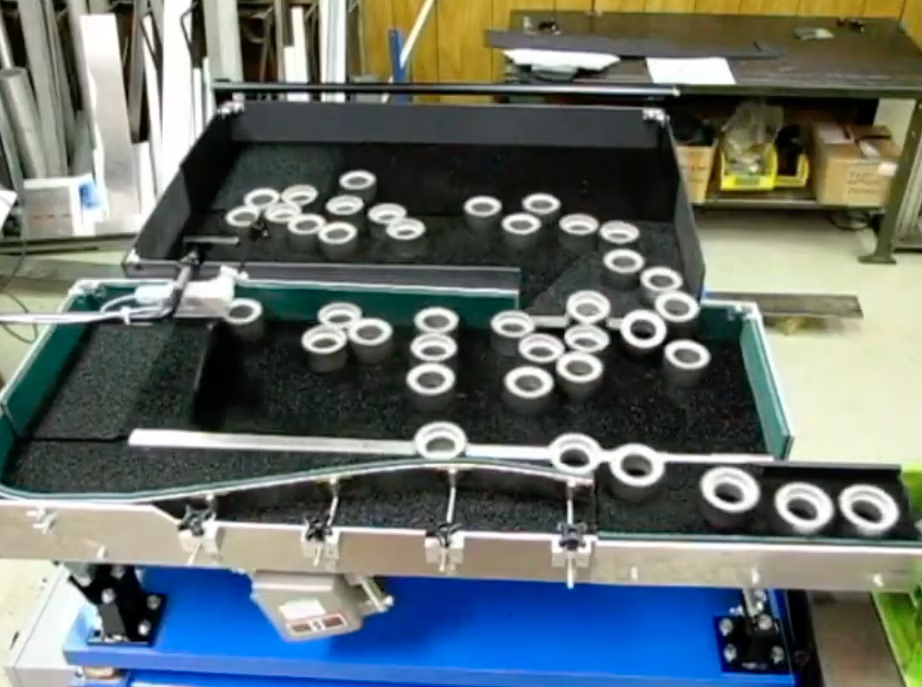
Vibratory feeders are indispensable to modern manufacturing. They serve as a critical link. They automate the positioning, sorting, and handling of bulk components and materials. Chiefly, their importance comes from three core benefits they deliver to industrial operations.
Enhanced Productivity and Efficiency
These vibratory feeders are designed as workhorses. They are built for continuous operation. They use a controlled, repetitive motion. Hence, they ensure a measurable and consistent feed rate. This material flows into downstream processes. These may include assembly stations, mixers, or packaging lines.
A vibratory feeder uses controlled vibrations. It moves and discharges bulk materials from a chute, bin, or hopper. Typically, the material flows into another process or machine. These targets include a weigh scale, a conveyor belt, or a packaging machine. In contrast to longer vibratory conveyors, feeders prioritize metering, controlled flow, and often, orientation.
CDS-Lipe manufactures a variety for Vibrarory Feeders that are high quality and reliable. Precision and Control: This is their primary advantage. The feed rate can be accurately controlled, from a trickle to a high volume, often with immediate responsiveness, making them ideal for batching, blending, and continuous process control. We can work with your team to provide you the perfect solutions.
Precision and Control:
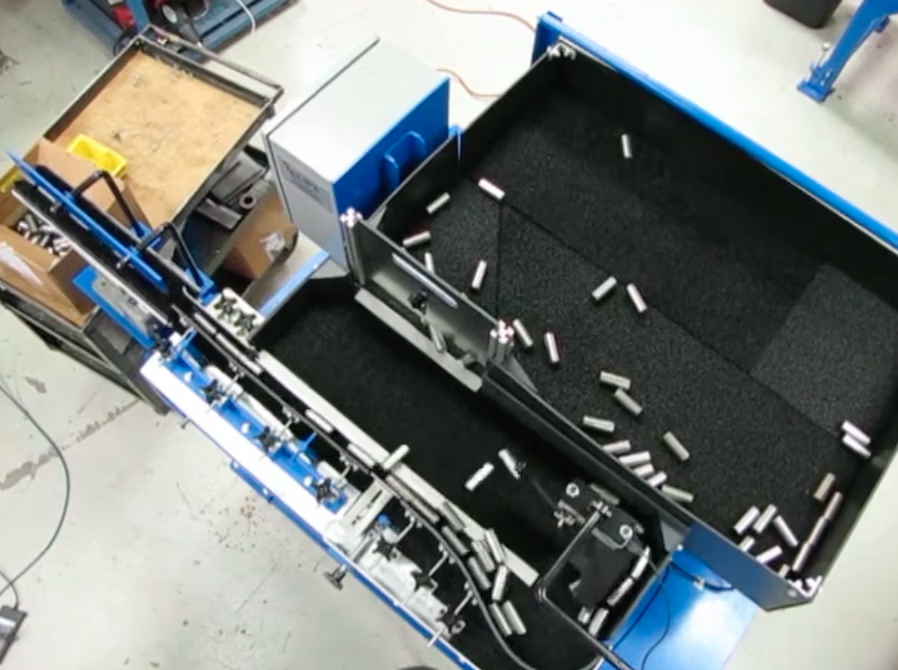
This is the primary advantage. The feed rate can be accurately controlled. This control ranges from a trickle to a high volume. Moreover, responsiveness is often immediate. This makes them perfect for blending, batching, and continuous process control.
Since 1972, CDS-Lipe has provided vibratory part feeding solutions. We are best known as the manufacturer of the Dyna-Slide Part Feeding and Accumulation Systems. For example, the Feed-A-Matic line is being reintroduced. These are now called Dyna-Feed Vibratory Bowl Feeders. This product is proven and has a deep design history.

Dyna-Feed Bowl Options
Dyna-Feed Vibratory Bowl Feeders are available in various designs:
- Cylindrical
- Conical
- Step Design
- Outside Track
- Multi-Track
Bowls come in Stainless Steel or Cast Aluminum. Feeders are supplied with CE marking. Consequently, they conform to the latest, most stringent safety standards. Dyna-Feed feeders are available with both Full Wave and Half Wave drives.
- Half Wave drives are ideal for heavy parts.
- Full Wave drives are well suited for smaller, precision parts.
The Full Wave design consumes 40% LESS ENERGY. Furthermore, it has lower maintenance costs compared to Half Wave technology.
- USDA-FDA Spec. Vibratory feeders are also available. These handle materials, packaging, and parts such as:
- Caps and Jars
- Ampules, Tubes, and Syringes
- Pouch Feeding
CDS-Lipe manufactures a variety of reliable, high-quality vibratory feeders. We can work with your team. In conclusion, we will provide you with the perfect material handling solutions.
Q&A Section
Q: How does the drive mechanism affect feeder performance?
A: The drive mechanism (electromagnetic or electromechanical) determines the frequency and amplitude of vibrations. Electromagnetic drives offer fine, immediate control for metering, while electromechanical drives (using rotating weights) provide high force and are often used for larger, higher-volume applications.
Q: What is the significance of CE marking on the Dyna-Feed feeders?
A: The CE marking signifies conformity with relevant European safety and health protection standards. This assures process engineers that the equipment meets stringent regulatory requirements for operation and installation, especially in international manufacturing environments.
Q: Why are Full Wave drives more energy efficient than Half Wave drives?
A: Full Wave drives activate the vibration coils on both the positive and negative cycles of the AC current, effectively doubling the operational frequency. This allows the feeder to achieve the required travel speed with a lower power input and smoother motion, resulting in up to 40% less energy consumption than the single-cycle Half Wave technology.
Q: What does "orientation of individual parts" mean in the context of vibratory feeders?
A: For assembly line applications, specialized vibratory bowl feeders not only move parts but also use tooling to sense and reject incorrectly oriented components. This ensures every part discharged is in the exact position (e.g., screw head up, component tab forward) required for the downstream automated process.
Q: Where are USDA-FDA specification feeders primarily used?
A: These specialized vibratory feeders are used in food, pharmaceutical, and clean-room packaging operations. They are constructed from materials like stainless steel with smooth, non-porous surfaces that can be easily sanitized. This prevents bacterial growth and meets strict regulatory standards for handling consumables.
Contact us today. CDS-Lipe stands as your trusted engineering partner, ready to optimize your most demanding automated material handling systems.
