



Assembly Line Conveyor for Automation
Why an Assembly Line Conveyor for Automation Drives Rapid Deployment
An Assembly Line Conveyor for Automation is a smart transport system built to improve production flow across active workstations. Specifically, this equipment matters for rapid deployment because it lets engineers adapt layouts without ripping up the floor. The result? You bypass massive downtime and hit target throughput rates instantly.
What Drives Reconfiguration Speed on the Floor?
Well, things break down quickly. In practice, I see process engineers struggle with rigid setups daily. Here's the thing: inflexible layouts kill productivity completely. Have you ever tried moving a welded-steel transport line over a holiday weekend? Truthfully, most engineers overlook the hidden labor costs of static designs. Instead, they just accept the bottleneck as normal. We fight for every inch of floor space out here. Frankly, nobody has room for bulky, outdated machinery anymore. Fortunately, an Assembly Line Conveyor for Automation completely changes this dynamic.
The Hidden Costs of Static Designs
...which brings us to the real problem of custom manufacturing applications. Then again, products evolve constantly to meet market demands. Therefore, your automated material handling equipment must keep pace. In short, we need technology to optimize workflows immediately. Even so, many plants still rely on outdated, inflexible hardware. Consequently, their OEE plummets during simple product changeovers. You end up paying skilled technicians to turn wrenches instead of optimizing logic. Actually, this is where smart transport changes the math completely.
A Real-World Scenario on the Floor
How do you handle sudden production shifts? Imagine walking into the plant on a random Tuesday morning. Management suddenly wants to run a new, slightly wider SKU. Previously, your fixed rollers would require hours of cutting and re-welding. You would lose an entire shift easily. Now, picture sliding a few side rails and updating the PLC integration parameters. The mechanics just unbolt the guides. They slide them over two inches. Then, they lock them back down securely. Suddenly, you are back online before the morning coffee break. That is the exact power of an Assembly Line Conveyor for Automation.
Modular Belt Conveyors vs. Traditional Fixed Systems
Currently, 60 percent of unplanned downtime stems from equipment adjustments. Yet, upgrading to modular belt conveyors delivers increased efficiency and throughput reliably. Let's compare the core engineering differences directly.
| Engineering Criteria | Modular Belt Conveyors | Traditional Fixed Conveyors |
| Reconfiguration Time | Minutes to hours (snap-together links) | Days (requires cutting and heavy welding) |
| Throughput Capacity | Highly scalable via variable speed drives | Rigid and severely limited by original motor sizing |
| Maintenance Needs | Extremely low (replace single broken links) | High (requires replacing entire belts or large sections) |
| Cost per Unit Handled | Decreases rapidly over time | Remains static or increases with mechanical wear |
Dyna-Belt belt conveyors are designed to allow for the rapid development of conveyors customized for specific applications utilizing pre-engineered components. These belt conveyors can be quickly configured to meet the requirements of your automation application for many applications and most industrial environments. Hoppers, troughing features, variable speed controls, indexing controls, singulation escapements, plug and play part counters, a belt conveyor speed indicator and accumulation capabilities are all readily available.
Analyzing Cost Per Unit Handled
By the way, cost metrics matter heavily to floor managers. Initially, a custom setup feels slightly expensive. However, you must look at the long game. Ultimately, rapid reconfiguration drops your overhead dramatically. Better yet, you stop paying for idle time completely. You lose valuable time swapping out custom fixtures normally. Nobody wants to explain those delays to the plant manager. It is a terrible conversation. Similarly, your maintenance crew stops fighting outdated sprockets. Over time, the cost per unit handled shrinks to pennies.
Mastering Accumulation Zones Effectively
..because avoiding product collisions is absolutely critical. Basically, you cannot just shove parts down a line blindly. Accordingly, controlling accumulation zones prevents catastrophic jamming. An Assembly Line Conveyor for Automation excels at this exact task. It uses built-in sensors to manage flow effortlessly. As a result, parts do not smash into each other during backups. Your scrap rate drops significantly across the board.
Zero-Pressure Accumulation in Action
What happens when downstream machines fault out unexpectedly? Normally, a massive pileup occurs on the belt. Luckily, zero-pressure accumulation prevents this disaster entirely. The conveyor physically stops sections of the line independently. Thus, individual parts sit safely in their designated zones. Eventually, the downstream fault clears up. At that point, the system releases the parts sequentially. Everything glides smoothly into the robotic pickup cells.
How Automated Material Handling Equipment Elevates Operations
After all, experience matters out here. At CDS LIPE, our team understands the reality of tight production schedules. We know that premier automated material handling systems require precise engineering. Ultimately, an Assembly Line Conveyor for Automation must serve the operator. So, how do we guarantee this? We focus heavily on minimizing friction points everywhere. Consequently, throughput rate metrics always climb steadily.
Minimizing Friction Points on the Line
...which is why we analyze every single transfer point. Honestly, smooth handoffs define a successful layout. Rough transitions flip parts and trigger sensor errors constantly. To fix this, we engineer custom guides and sweeps carefully. Then, the product flows continuously without manual intervention. Seriously, reducing operator touchpoints is the ultimate goal here. You want the machine doing the heavy lifting. We build systems that operators actually like using daily. Frustrated workers make mistakes. Happy workers keep the line moving safely.
Integrating Smart Technology Fast
Why do some deployments stall for months? Often, the control systems are too archaic to adapt. By contrast, modern layouts communicate instantly with your existing network. Thus, making adjustments takes seconds instead of hours. Sure, you have to plan the logic carefully beforehand. Regardless, the physical setup of an Assembly Line Conveyor for Automation remains highly adaptable. You just plug, test, and run.
The Role of Variable Speed Drives
Frankly, speed control dictates your overall flexibility. You cannot rely on a single-speed motor anymore. Thankfully, variable speed drives solve this issue completely. They let you ramp up velocity during peak demand effortlessly. Conversely, you can slow things down for delicate assembly steps. Operators can dial in the exact speed required. This prevents bottlenecks at manual inspection stations safely. Nobody feels rushed or overwhelmed on the floor. This granular control boosts your OEE immensely.
Navigating Maintenance Without Losing Shifts
Actually, maintenance departments hate complex machinery. Usually, complicated systems require specialized technicians to fix them. You end up waiting days for a contractor to arrive. Meanwhile, your production line sits completely dead. Obviously, this destroys your quarterly throughput targets. Thankfully, modular components use standard, accessible parts universally. You can train your in-house crew very quickly.
Simplifying Drive Motor Replacements
...because swapping motors should never take all day. We fight for every minute of uptime on the floor. Therefore, engineers design these layouts with quick-disconnect fittings. The mechanics just unbolt the faulty drive unit. Next, they drop the spare motor into place instantly. Finally, they reconnect the power and hit start. You are back running in twenty minutes flat.
Scaling Throughput Rate for Future Demands
Eventually, your production goals will triple. Can your current layout handle that volume? Usually, fixed setups fail under pressure. Instead, modular designs let you bolt on extra capacity easily. You just add another drive section and keep going. This future-proofs your entire facility intelligently.
Hitting Your OEE Targets Consistently
...because consistency wins the manufacturing game. In reality, erratic production rates destroy profit margins. You need a steady, predictable flow of goods. Therefore, standardizing on flexible transport helps immensely. An Assembly Line Conveyor for Automation creates that desired rhythm reliably. Your operators fall into a comfortable cadence quickly. Ultimately, you hit your daily quotas without breaking a sweat.
5 Common Questions from Process Engineers
Q. What exactly defines an Assembly Line Conveyor for Automation?
It is a mechanized path built specifically to improve production flow between automated cells. This equipment integrates directly with your programmable logic controllers.
Q. How does it impact my OEE directly?
It drastically reduces micro-stops across the board. By optimizing accumulation zones, machines never wait for parts or crash into each other.
Q. Can these modular systems handle dirty, abrasive environments?
Absolutely. In fact, modular belt setups shed debris easily and allow for incredibly quick washdowns between active shifts.
Q. Are variable speed drives necessary for basic workstation setups?
Usually, yes. Basically, they give you the critical flexibility to tune throughput rates on the fly as demand changes.
Q. Why choose this over a standard, fixed belt system?
Adaptability is the key to survival today. An Assembly Line Conveyor for Automation scales with your future products instead of locking you into rigid dimensions.
Ready to upgrade your floor? When you need to deploy reliable systems without delays, partner with CDS LIPE for proven engineering solutions that actually work.
Contact CDS LIPE today to partner with a trusted engineering expert for your next automated assembly project.
Downloadable Documents


Conveyors for press out feed and machine process applications. Steep Angle Incline- Elevators, Belt Conveyors for both industrial, wash down and sanitary direct contact applications, Index Conveyors for assembly operations Twin Strand Conveyors and Fixtured Conveyors

Low Profile Automation Conveyors
LP-2 Series is a Low Profile Belt Conveyor designed for automation applications to 250 lbs Live Load Capacity- Rigid Aluminum Construction 45mm Side Frame available to 1.5" to 48" Width and 18" to 25' in length

Heavy Duty Automation Belt Conveyors
LP3 Series Heavy Duty Automation Belt Conveyors are for up to 1000 lbs Live Load Capacity-Aluminum Construction Features Indexing Drives, 90mm Side Frame

Low Level Hopper-Elevator-Feeder
PB Series Direct Drive Belt Conveyors eliminate tracking errors and can incorporate integrated high level sensor to create stand alone "on demand" hopper feeder. ,25 to 20 cu ft styles.

Profile Bed 1.0” Belt (0.75”) — Belt conveyors that can go where conventional conveyors will not fit. Our Guided Belts & Lube For Life Bearing make these belt conveyors maintenance-free Simple take up allows belts to be changed in less than 5 minutes using standard hand tools. Available with wide range of belt conveyor options and stainless steel construction for wash down applications. Ideal for use where other belt conveyors manufacturing plants as well as distribution centers, packaging lines, metal stamping press outfeed and precision manufacturing environments, and more…Top, Bottom, Side Mount Drives, Fixed Speed and VFD Belt Conveyors Available

LP2 Belt Conveyors with 17 Tooth or 25 tooth drives, encoder feedback, stepper and servo controls available.

Including Modular - Z Type Belt Conveyors ,Steep Angle Inclines, Available with friction drives, direct drives and molded plastic belts.

Incline belt conveyors available w/ 1 to 10 cu ft hoppers. 316 SS construction available. Available with steep angle cleats to 4", sanitary, endless ultrasonic welded side walls and cleats available.

This is a custom product with USDA-FDA certified wire mesh belt conveyors suitable for a wide variety of meat, diary, bakery poultry, vegetable, fruit processing applications. Also available with industrial construction.

EZ Clean- USDA-FDA Belt Conveyors
Super Sanitary, American Meat Institute compliant belt conveyors, USDA-FDA Construction 12" to 48" Belt Width - 24" to 100' Long Trough Belts, Flat Belts, Incline Belts
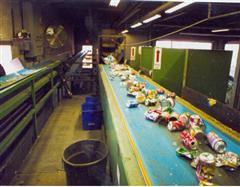
Harsh Duty Belt & Chain Conveyors
Belt Conveyors designed for the most challenging applications and environments.
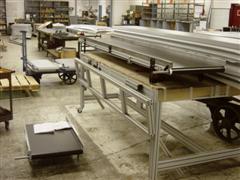
All of our belt conveyors are available on an OEM basis.