



Choosing the Right Feeder Manufacturer for Automated Conveyor Systems
A feeder manufacturer provides the essential hardware needed to regulate the flow of bulk materials into an automated assembly line. These manufacturers design specialized systems, such as conveyors and vibratory units, to ensure consistent parts orientation and timing. Consequently, choosing an expert like CDS LIPE ensures your autonomous material handling equipment operates with maximum precision and minimal downtime.
Why Is Selecting a Feeder Manufacturer Critical for Assembly Lines?
In the world of industrial automation, precision is everything. Process engineers must integrate components that communicate flawlessly. Therefore, the role of a feeder manufacturer goes beyond just building a machine. They provide the backbone of your throughput.
If the feed rate is inconsistent, the entire line suffers. First, cycle times will fluctuate. Next, sensor errors may trigger frequent stops. Ultimately, a high-quality feeder manufacturer prevents these bottlenecks by engineering custom solutions for specific part geometries.
Key Technical Components of Autonomous Material Handling
Autonomous systems require high levels of reliability. Engineers must evaluate several technical factors when selecting a feeder manufacturer. Below is a breakdown of the core technologies used in these systems:
| Component Type | Primary Function | Ideal Application |
| Vibratory Feeders | Uses electromagnetic pulses to move parts. | Small, complex hardware and fasteners. |
| Step Feeders | Lifts parts from a hopper via reciprocating plates. | Cylindrical parts requiring gentle handling. |
| Centrifugal Feeders | Utilizes rotary motion for high-speed sorting. | High-volume packaging and bottling. |
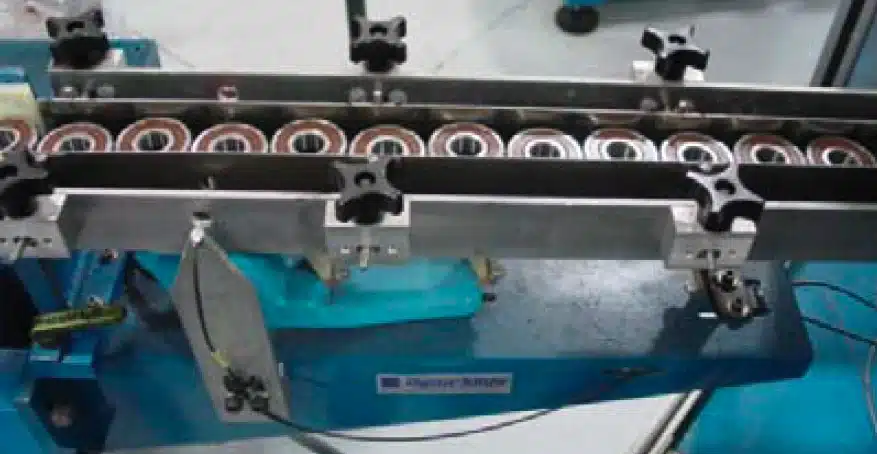
| Integrated Conveyors | Transports oriented parts between stations. | Connecting multiple assembly phases. |
How Does CDS LIPE Enhance Material Handling Efficiency?
CDS LIPE stands out as a premier feeder manufacturer due to decades of field experience. We understand that autonomous material handling requires more than just motion. It requires intelligent design.
For instance, our systems often incorporate advanced sensors to monitor flow. Because of this, our equipment adapts to real-time production demands. Furthermore, as a dedicated feeder manufacturer, we prioritize the “Mean Time Between Failure” (MTBF) metric. We build our conveyors to withstand 24/7 industrial cycles.
What Engineering Standards Should You Look For?
When you vet a feeder manufacturer, you should look for specific industry compliance. Reliable manufacturers adhere to strict standards to ensure safety and longevity.
- ISO 9001 Certification: This ensures consistent quality management throughout the build.
- UL/CE Compliance: These marks confirm the electrical safety of the control panels.
- NEMA Ratings: This defines the environment where the equipment can safely operate.
The Future of the Feeder Manufacturer in Industry 4.0
The industry is moving toward smarter, faster, and more modular designs. Thus, a modern feeder manufacturer must embrace digital twin technology. This allows engineers to simulate the assembly process before a single bolt is turned.
Additionally, we focus on reducing the footprint of our machines. Since floor space is expensive, compact conveyors are now a top priority. In conclusion, working with a seasoned feeder manufacturer like CDS LIPE guarantees that your system is ready for future upgrades.