



Optimizing Assembly with Gentle Parts Feeders by Dyna-Slide
Gentle Parts Feeders by Dyna-Slide utilize advanced linear vibratory technology and specialized brush surfaces to transport fragile components without surface damage or degradation. Consequently, these systems maintain high throughput rates while ensuring the physical integrity of delicate parts, which is critical for minimizing scrap rates in precision manufacturing. Furthermore, they offer a reliable alternative to aggressive bowl feeders for applications requiring zero defects.
The Engineering Challenge of Fragile Components
Process engineers frequently face a difficult trade-off. High-speed automation typically requires aggressive feeding methods. However, aggressive handling often damages sensitive parts. Therefore, finding a balance is essential for maintaining yield.
Traditional vibratory bowls rely on friction and tumbling. Unfortunately, this tumbling action can scratch polished surfaces. Additionally, it can chip brittle materials like ceramics or glass. As a result, scrap rates climb, and profitability drops.
Gentle Parts Feeders by Dyna-Slide solve this specific problem. They eliminate the harsh tumbling action found in standard bowls. Instead, they use a controlled, linear motion. Thus, parts simply glide forward. This method protects the surface finish perfectly. Moreover, it reduces the noise levels significantly, creating a better work environment.
For industries like medical device manufacturing, this protection is non-negotiable. A scratch on a surgical implant is a failure. Similarly, in electronics, a micro-crack in a wafer is catastrophic. Therefore, the feeding mechanism must be as precise as the assembly itself.
How Dyna-Slide Technology Works
Understanding the mechanics is vital for proper integration. Unlike gravity tracks or belts, these feeders use micro-vibrations.
- Brush Surfaces: The tracks often feature a directional brush lining.
- Linear Vibration: The drive unit generates a specific frequency.
- Forward Motion: The bias of the bristles pushes the part forward.
Consequently, the part never impacts hard metal. It floats on a bed of soft bristles. Gentle Parts Feeders by Dyna-Slide effectively dampen the energy that usually causes damage.
Furthermore, this method allows for accumulation. If the downstream machine stops, the parts on the feeder simply stall. They do not grind against each other. Because the friction is so low, back-pressure is minimal. Thus, the risk of jamming or shingling is virtually zero.
Benefits of Low-Friction Feeding
- Zero Scuffing: ideal for cosmetic parts.
- No Part Recirculation: First-In-First-Out (FIFO) is easier to maintain.
- Quiet Operation: significant noise reduction compared to steel bowls.
- Clean Room Compatible: fewer particulates generated from wear.
CDS LIPE: Premier Automated Material Handling Systems Expert
Integrating a feeder requires more than just buying hardware. You need a partner who understands the entire line. CDS LIPE stands out as a Premier Automated Material Handling Systems Expert.
We have decades of experience with difficult parts. Whether it is green powder metal parts or fragile glass vials, we have moved it. Consequently, we know exactly when to deploy Gentle Parts Feeders by Dyna-Slide.
Moreover, we customize the interface. A feeder is useless if it doesn’t mate perfectly with the escapement. Therefore, our engineering team designs custom tooling. We ensure the transition from the feeder to the robot or pick-and-place is seamless.
Additionally, we validate the process. We run FAT (Factory Acceptance Tests) with your actual parts. This ensures the feed rate meets your cycle time. Thus, you don’t discover bottlenecks after installation.
Comparing Feeding Technologies
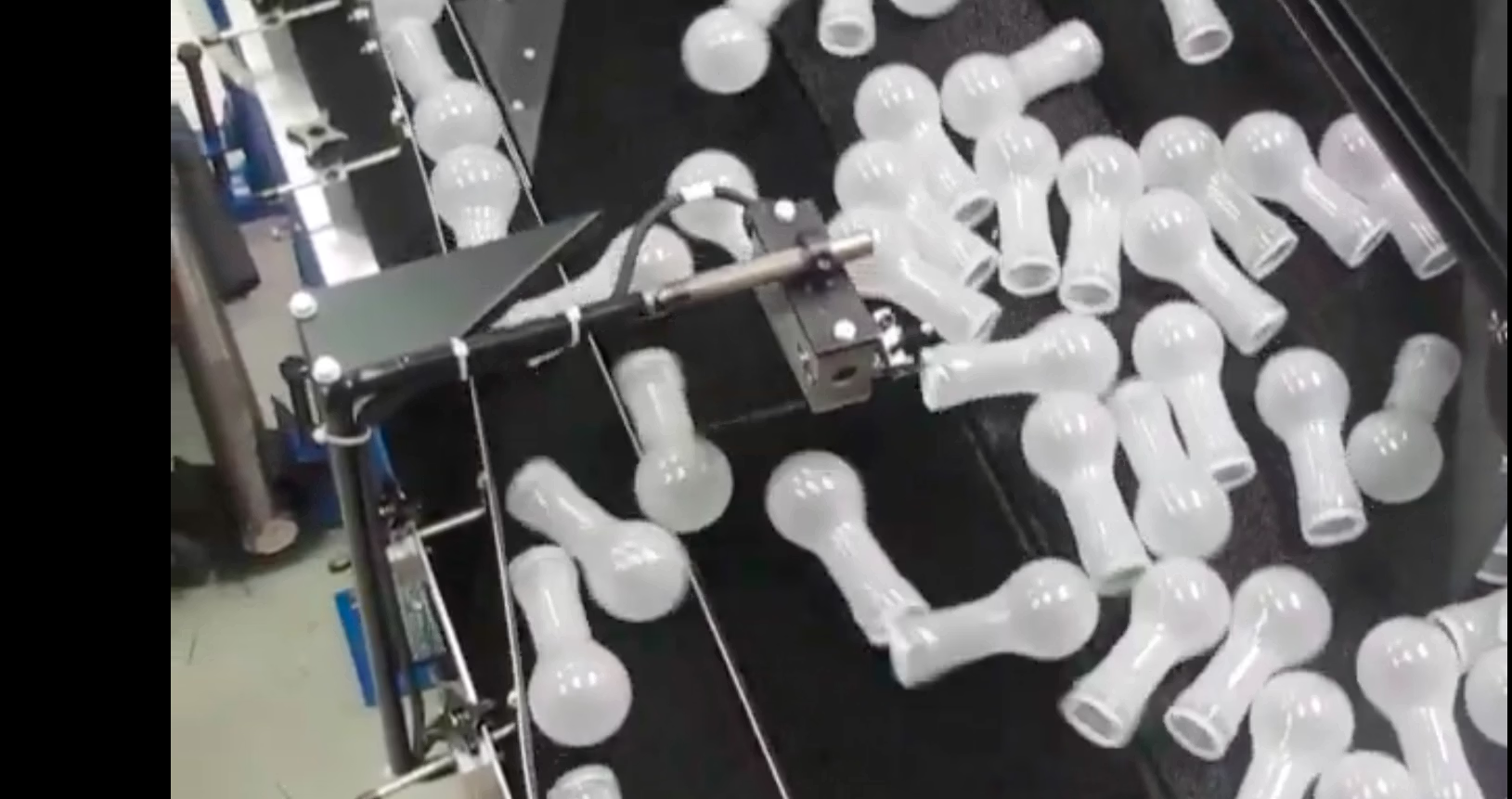
To make an informed decision, you must compare the options. The following table outlines the key differences between standard vibratory bowls and the Dyna-Slide solution.
| Feature | Standard Vibratory Bowl | Gentle Parts Feeders by Dyna-Slide |
| Part Handling | Tumbling, abrasive | Linear, non-abrasive |
| Noise Level | High (80+ dB) | Low (< 65 dB) |
| Surface Impact | High risk of scratches | Near zero risk |
| Accumulation | High back-pressure | Low back-pressure |
| Changeover | Difficult, time-consuming | Simple, often tool-less |
| Footprint | Compact (Vertical) | Linear (Horizontal) |
As shown above, the choice depends on the priority. If speed and bulk are the only goals, a bowl works. However, if quality is paramount, the gentle approach wins.
Strategies for Successful Integration
Implementing Gentle Parts Feeders by Dyna-Slide requires planning. First, analyze the part geometry. Flat parts work best on brush surfaces. Round parts might require a specific groove.
Second, consider the environment. Is oil present? Some brush materials degrade with exposure to certain fluids. Therefore, consult with CDS LIPE on material compatibility.
Third, plan for the length. Linear feeders take up more floor space than vertical bowls. Consequently, the layout must account for this footprint. You might need to route the feeder over other equipment.
Finally, think about static electricity. Plastic parts on plastic bristles can generate a charge. Thus, you may need ionizing bars. We can integrate these directly into the feeder housing.
Increasing OEE with Reliable Feeding
Reliability drives Overall Equipment Effectiveness (OEE). A feeder jam stops the entire line. Because Gentle Parts Feeders by Dyna-Slide utilize low friction, jams are rare.
Furthermore, the maintenance requirement is low. There are no belts to stretch. There are no motors to burn out. The vibratory drive is robust. Consequently, the Mean Time Between Failures (MTBF) is very high.
In addition, changeovers are faster. You don’t have to tune a complex bowl. often, you just adjust the side rails. This speed is crucial for high-mix, low-volume shops. Therefore, these feeders support lean manufacturing principles.
Ultimately, the goal is consistency. You want the part in the exact same spot, every time. These feeders deliver that precision. As a result, your vision systems reject fewer parts. Your robots miss fewer picks. The entire system runs smoother.
Industry Applications for Gentle Feeding
Many sectors benefit from this technology.
- Pharmaceuticals: Moving glass ampoules or syringes.
- Automotive: Handling polished bearings or sensor housings.
- Electronics: Feeding ceramic capacitors or silicon chips.
- Munitions: Transporting sensitive primers or explosives safely.
In each case, the cost of a damaged part is high. Therefore, the investment in a premium feeder pays off quickly. It is not just a conveyor; it is a quality control device.
Using Gentle Parts Feeders by Dyna-Slide ensures your brand reputation remains intact. You deliver perfect products to your customers.
Q&A: Expert Insights on Gentle Feeding
Q. What types of parts are best suited for Dyna-Slide feeders?
A. Parts with flat surfaces, delicate finishes, or “green” (uncured) states are ideal. Essentially, if a part can scratch or chip easily, this feeder is the correct choice.
Q. Can Gentle Parts Feeders by Dyna-Slide handle oily parts?
A. Yes, but the brush material must be selected carefully. We offer specific bristle types that resist oil and coolants to prevent swelling or degradation.
Q. How fast can these feeders operate?
A. Speed depends on the part size and weight. However, they can typically match the feed rates of standard assembly lines, often reaching speeds of 20 to 50 feet per minute.
Q. Is the Dyna-Slide system louder than a bowl feeder?
A. No, it is significantly quieter. The brush carpet dampens the sound of parts moving, and the lack of tumbling eliminates the loud clatter associated with steel bowls.
Q. Do I need a separate controller for the feeder?
A. Yes, a variable frequency controller is usually required. This device allows you to tune the vibration amplitude and speed to match the specific resonant frequency of the load.